

While hitting the road with a Tesla can be fun, it also comes with its challenges. Whether it’s your first time driving hundreds of miles across the country or you’ve done it a couple of times, knowing some proven Tesla hacks can help you make the trip extra enjoyable.
Read on to learn some amazing tesla road trip tips. They’re sure to make your cross-country adventure worth the while.
1. Plan Your Route Using the Tesla Touchscreen
Once you choose your start and final destinations, Tesla’s navigation takes it from there and will suggest a route through several charging locations.
You can also turn on traffic-based routing by tapping the map settings icon. This option will suggest an alternative route based on traffic, allowing you to get to your destination a lot faster.
By planning your route through the Go Anywhere tool, you’ll be in full control of when and where you get to charge your car. This gives you the chance to take longer or shorter routes to your destination, depending on your preferences.
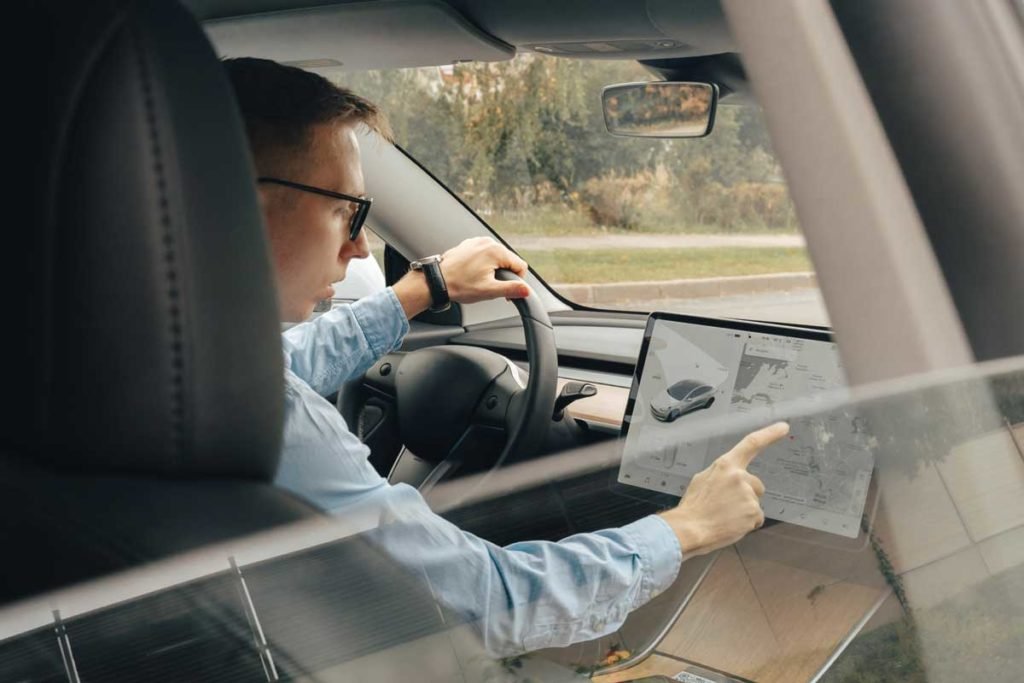
Another advantage of planning your route is the ability to explore several destinations with charging locations, such as shopping centers, hotels, and restaurants. This allows you to take breaks while on the road, which can come in extremely handy when embarking on long road trips.
Be on the lookout for gray pins. They’ll indicate destination charging centers along your path. Lighting bolt icons, on the other hand, will show you supercharger locations.
2. Consider Other Route Planning Apps
While Tesla’s stock route planner app effectively identifies charging stops, other apps can make more detailed suggestions that can come in handy for long road trips.
For instance, Plugshare will suggest over 180,000 charging stations in Canada and the US, and well over 275,000 charging stations globally.
A Better Route Planner is another great app for planning your trip. Besides providing traffic updates, it also gives you real-time weather forecasts and informs you about Tesla supercharger availability.
These apps will allow you to identify stopovers with EV chargers while also suggesting exciting detours that can add to your road trip experience.
Before settling for a suggested hotel, it’s highly advisable to inquire about its EV charging policies well in advance. Some hotels have one charger, meaning you might have to wait for other Teslas to charge. Depending on your plan, this could be a huge inconvenience.
3. Have Your Tesla Checked Before Hitting the Road
Doing a quick checkup on your Tesla before embarking on your cross-country road trip can make all the difference in your trip. Head over to a local Tesla Service Center a week or two before your set departure date. Let the experts examine your car for any issues that might need fixing.
Your service person will most likely check on your tires and wheel alignment, steering and suspension, cabin air filter, brakes, and fluids.
Scheduling an appointment weeks before your scheduled travel will give you enough time to make repairs, which is always a better idea than going in for last-minute checkups.
If you don’t to a check-up with some buffer time, you may end up having to move your departure date ahead.
4. Travel As Lightly As Possible
When traveling long distances in your Tesla, another valuable tip is packing light. Make sure to carry only what you need. With a lighter load, your Tesla will be more likely to conserve its range.
Make sure to take away all unnecessary items. Tesla recommends removing rear racks and roof racks when not in use. They can contribute to aerodynamic lag and add to the car’s overall weight.
By traveling light, your Tesla will conserve more energy, thereby increasing your range. A few extra miles can make all the difference when driving long distances.
5. Reduce Aerodynamic Drag in Your Tesla
Reducing aerodynamic drag in your Tesla will help you drive efficiently and conserve as much range as possible. If your car is equipped with the air suspension feature, Tesla recommends changing its settings to very low when cruising at highway speeds.
You should also close all windows when driving to reduce drag. The more resistance your car has to deal with, the more energy and charge it will consume. It’s tempting to open windows throughout the journey, but if your battery is low, it’s a good idea to have them closed.
If you’re driving a Model 3 with aero wheels, Tesla recommends installing aero wheel covers for added efficiency when driving. Aero wheel covers add 3-4% efficiency, which is enough to be felt when driving long distances. In addition to improving efficiency, using aero wheel covers can also help protect the tires from debris and wear. For those interested in maximizing their vehicle’s performance and understanding tire maintenance, resources such as ‘tesla tire lifespan explained‘ provide valuable insights on how to extend the longevity of your tires. This knowledge not only enhances your driving experience but also contributes to overall savings on tire replacements.
6. Set Charge Limit to 100 and Schedule Departure
As a Tesla owner, it’s crucial to maintain good charging habits to protect your battery, meaning your charging limit is likely set to under 90 for day-to-day use.
However, to have a maximum range for your road trip, you’ll better change settings from the ‘Daily’ range to the ‘Trip’ range. This will allow your Tesla to charge all the way up to 100%.
You can use the mobile app or your vehicle’s touchscreen to change your daily range. Scheduling departure will ensure your car is climate-controlled and ready by the time you plan to start the trip.
Allowing your Tesla to charge up to 100 will allow you to drive for a long while without having to charge, which can add a much-needed level of convenience to your road trip.
7. Autopilot Can Come in Handy
Tesla’s autopilot can make driving less stressful during extra-long road trips. Taking advantage of this feature on freeways and streets with lane dividers can help you ease off a bit, making your trip more enjoyable.
It’s worth noting that Tesla’s autopilot feature is more co-driving than autopilot. You’ll still need to be in control of the vehicle, although in a more passive manner. It’s advisable to keep your hands on the steering wheel and apply occasional pressure. Think of autopilot as your assistant.
When using autopilot, it’s recommended to set the following distance to maximum. This will give you more time to react in case the feature disengages abruptly.
Another way you can conserve energy when driving on autopilot is by cruising behind semis.
Big rigs will help you increase overall range since they reduce air resistance. Again, make sure to follow them at maximum range and keep your hands actively on the steering wheel.
8. Keep a Close Eye on the Energy App
You can learn more about your energy consumption patterns by clicking on the Energy App on your touchscreen. The app is designed to help drivers maximize range, which can come in handy when driving long distances.
The Energy app is updated as you drive, collecting patterns and using the data to project range estimates.
The app then leverages the data collected to forecast your charging needs. This allows you to know whether you’re using excess energy and are at risk of depleting your reserves before the next charging station.
If you notice you’re consuming too much energy, make adjustments to reduce overall consumption.
For instance, you can shut all windows, reduce your overall speed and turn off the HVAC system. Stop-and-go driving can reduce your range, which is why it’s a good idea to maintain a constant driving speed—especially when low on charge.
9. Cold Weather Traveling Increases Energy Consumption
Cold batteries need extra energy to operate at an optimal temperature. Moreover, your Tesla’s regenerative braking capability will be reduced in cold weather, resulting in less energy conserved.
It would be best to plan for road trips during warmer months. But if you must travel during winter, then it’s crucial to take additional steps to conserve as much energy as possible.
For starters, you can preheat your car by opening the Tesla app and tapping on Climate to turn preconditioning on. You can also preheat your car by clicking on the defrost icon on the Tesla app.
You should also watch out for the snowflake icon that will pop up on your screen if the car’s battery is too cold to function optimally. The snowflake icon will limit features like regenerative braking.
When driving during wintertime, you can conserve energy by driving at conservative speeds. Avoid going full out lest you drain most of your charge. Limiting frequent acceleration and deceleration will also help you conserve charge and increase your overall range.
10. Installing Tesla Sunshade Can Enhance Overall Comfort
If your plan is to drive during summer, then you must be prepared to deal with soaring temperatures. A Tesla sunshade adds to your overall comfort by reducing internal temperatures by blocking heat transmission.
Investing in a Tesla Sunshade is a great idea, especially if you plan to drive for long hours during the day.
A sunshade works by creating a direct barrier between the roof of the car and its interior, thereby leading to a cooler internal environment.
While a sunshade might not be everyone’s cup of tea, it can come in extra handy if you’re not a big fan of driving in hot temperatures. It will make it a lot easier to sit inside your car while it’s charging.
11. Balance Between Superchargers and Destination Chargers
The whole idea of a road trip is to enjoy breathtaking scenery as you cruise across the country. It’s highly advisable to strike a balance between superchargers and destination chargers so that you don’t miss on great spots.
While relying solely on superchargers will ensure you get to your destination faster, destination chargers will allow you to enjoy new sceneries and make stops at malls and restaurants.
If you’re sleeping at a friend’s place or at a hotel that allows for EV charging, try asking if they allow for overnight charging. This will keep your Tesla fully charged and well-heated until your scheduled departure.
Frequently Asked Questions
Is Tesla a Good Choice for Long Road Trips?
This will ensure you have enough charging options to get to your destinations.
It’s also important to pack light to avoid consuming too much energy and shut windows to reduce aerodynamic drag— especially when the battery is running low. Summer traveling can also reduce your overall energy consumption, allowing you to make the most of your range.
Is Tesla’s Trip Planner 100% Accurate?
Tesla is constantly updating its apps, meaning the travel planner is likely to increase its accuracy. In addition to Tesla’s trip planner, you can also use apps like A Better Route Planner, ChargePoint, and Plugshare to increase overall accuracy and prevent range anxiety.