

Demand for electric vehicles continues to rise year on year, with more manufacturers designating their electric range as their primary focus. As the battery pack technology continues to progress, people are naturally curious to know how much better electric vehicle ranges will be in the future.
A 600-mile (970 km) range may be possible for electric vehicles in the coming years. This goal requires various technological breakthroughs and extensive Research & Development.
In this article, I’ll discuss what ranges may be possible in the future, along with the challenges that will be faced in achieving these goals.
What Impacts the Range of an Electric Car?
Conventional petrol and diesel-powered cars use different levels of fuel. While some cars are gas guzzlers, others are economical and use almost no fuel. The size of the fuel tank and the vehicle’s fuel consumption affect the distance that can be traveled between refuels.
The range of an electric car is determined by the size of the battery and the rate at which the car consumes electricity, directly affected by the battery’s energy efficiency. The capacity of an electric vehicle’s lithium-ion battery is equivalent to the size of a regular fuel tank.
Some other factors impact how long your charge will last. The faster you drive your vehicle, the more quickly you will eat through your battery’s energy. Also, driving in strong winds and up steep inclines will require more energy than usual.
How Far Can Electric Cars Travel at the Moment?
While it may not seem like it, electric cars have been around for quite a few years now. As such, the battery pack technology has already evolved and arrived at a point where cars can have impressive ranges.
Currently, the electric car with the longest range (441 miles or 700 km) is the Mercedes-Benz EQS 450+. The car is very long to accommodate the large 107.8 kWh battery. It’s the last word in luxury and comfort, but not every EV can achieve this range.
Of course, this car is an exceptional piece of automotive engineering and sits right at the top of the electric vehicle spectrum. So, you could not expect the average electric car to output such impressive range figures.
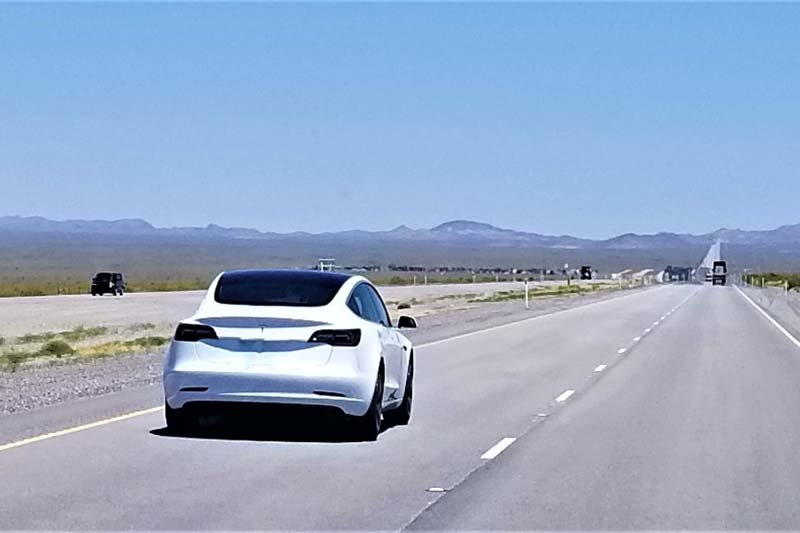
On a similar note, I also wrote a helpful guide and explained How Far Electric Cars Go in general. I also explain more about the history and evolution and the electric vehicle. Check it out! Additionally, I provide essential electric car ownership tips that can help new and prospective owners navigate their experience effectively. From understanding charging options to maintenance best practices, these insights are invaluable for making the most out of your electric vehicle journey. Don’t miss out on these important details that can enhance your driving experience!
The year 2020 was a landmark year for the electric vehicle industry. For the first time since the creation of electric vehicles, the median range in the United States was 250 miles (400 km). In other words, 50% of electric vehicles achieved a range of 250 miles (400 km) or more.
This figure represents an almost 400% increase in the median range recorded at the decade’s start. It certainly bodes well for the future, but we’re also probably reaching the upper limits of the technology currently available.
How Far Can Electric SUVs Travel?
The first electric vehicles were all compact sedans. Automotive manufacturers chose this body style because it required the least amount of materials, resulting in a lighter car that put less strain on the battery.
But as EV batteries have improved, the types of electric vehicle body types have diversified. For example, there are now several types of electric SUVs available to consumers.
However, the battery capacities, maximum range, and miles per gallon equivalent (MPGe) of these vehicles are highly variable. Be sure to check out the chart below for a concise rundown of these differences.
| Make, Model, and Year | Battery Capacity | Maximum Range | MPGe (city/highway) |
| 2021 Volkswagen ID.4 | 82 kWh | 260 miles (418 kilometers) | 102/90 |
| 2022 Volvo XC40 Recharge | 78 kWh | 223 miles (359 kilometers) | 92/79 |
| 2022 Kia Niro EV | 64 kWh | 239 miles (385 kilometers) | 123/102 |
| 2022 Mazda MX-30 | 35.5 kWh | 100 miles (161 kilometers) | 98/85 |
| 2022 Jaguar I-Pace | 90 kWh | 234 miles (377 kilometers) | 80/72 |
| 2022 Hyundai Kona EV | 64 kWh | 258 miles (415 kilometers) | 132/108 |
| 2022 Audi e-Tron | 95 kWh | 222 miles (357 kilometers) | 78/77 |
| 2022 Hyundai Ioniq 5 | 77.4 kWh | 303 miles (488 kilometers) | 132/98 |
| 2022 Tesla Model X | 100 kWh | 351 (565 kilometers) | 107/97 |
As you can see, Tesla continues to lead the EV industry in terms of battery capacity and maximum vehicle range. That said, other leading car manufacturers are quickly closing the gap.
Jaguar and Volkswagen are two leading competitors, producing EV SUVs with battery capacities of 80 kWh or greater. But the 2022 Hyundai Ioniq 5 features one of the most impressive ranges of any non-Tesla, with a maximum driving distance (per charge) of 303 miles (488 kilometers).

Future Range of Electric Cars
Almost every legacy car manufacturer has an electric vehicle for sale, so it’s an exciting time for the industry. While increased ranges may require a technological breakthrough, such a breakthrough may not be that far away. As the market shifts towards electrification, the impact of electric cars on mechanics will become increasingly pronounced. Traditional servicing practices may evolve, creating new opportunities for technicians to specialize in electric vehicle maintenance and repair. Additionally, as more drivers transition to these eco-friendly options, the industry will need to adapt to accommodate the unique requirements of EV technology. As the demand for electric vehicles grows, automakers will likely invest more in research and development, potentially leading to innovations that could lower future prices of electric cars. This drive for affordability will not only make EVs accessible to a broader audience but also encourage more individuals to consider the long-term cost benefits of switching from traditional gasoline-powered vehicles. Moreover, as the infrastructure for charging stations expands, the overall convenience of owning an electric vehicle will enhance its appeal in the marketplace.
Innolith, a recently created electrical company from Switzerland, claims to have moved the goalposts for the range that a battery can offer. They have boldly claimed to be the first company in the world to produce a battery with a capacity of 1,000 Wh/KG.
To illustrate the significance, you should consider that the US Department of Energy has invested heavily in a project that seeks to create a 500 Wh/KG battery! If Innolith has achieved this, they may well have redefined what’s possible with battery technology.
It’s estimated that one of Innolith’s batteries would offer approximately 620 miles (1,000 km) of range in an EV. This range is far superior to any electric vehicle that’s on sale anywhere in the world.
A range of 620 miles (1,000 km) is the final frontier for battery manufacturers, and many of them are taking great strides toward this objective.
Recently, Mercedes-Benz announced its plans to launch a car with this range. It’s part of a planned €40 billion investment over the next decade.
Cleantechnica estimates that the average range of an electric vehicle should be 400 miles (600 km) by 2028. It would go a long way toward eliminating the ‘range anxiety‘ that can prevent people from investing in an electric vehicle.
The Benefits of Increasing EV Range
Aside from representing a significant technological breakthrough, electric cars with a longer range (1,000 miles/1,609 kilometers per charge) would bring many benefits to our lives, including:
- Owning an EV will be more convenient. Even with supercharging infrastructure, charging your electric car remains a nuisance. More range means less charging, which in turn means fewer stops at charging stations.
- Electric car owners can go on spontaneous trips. Some electric vehicle owners may shy away from going on spur-of-the-moment trips. After all, not all destinations have EV charging stations. A more capable battery may mean more fun weekend trips.
- Batteries will enjoy a longer lifespan. Charging your battery to its maximum capacity can shorten its overall lifespan. In the future, drivers could charge their battery to a lesser percentage and still enjoy an impressive range. This trend could help drivers extend the lifespan of their EV’s battery.
- You’ll be able to charge your car battery in a flash. Another potential benefit of more powerful EV batteries is faster charging. After all, if you’re only charging your battery to 50% to 80%, you can get in and out of charging stations more quickly.
- A more diverse selection of EV body types will become available. When EV ranges increase, consumers will be likelier to ditch their gas-powered cars and purchase an EV. This transition is bound to encourage car manufacturers to design and produce EVs in a greater range of body styles, from compact sedans to pick-up trucks.
- Fewer cars will emit harmful emissions. A more impressive range is bound to entice drivers that currently own gasoline-powered vehicles. As a result, there might be fewer pollutant-emitting vehicles on the roads.
- Drivers can visit remote destinations. When manufacturers finally equip EVs with batteries capable of lasting 1,000 miles (1,609 kilometers), visiting your favorite faraway destinations will be far easier. With that kind of range, you could drive from New York City to St. Augustine, Florida on a single charge.
- EV prices may decrease. The lighter the electric vehicle, the greater its range. But this design not only serves to help EVs tackle long-distance journeys. It might also influence future EV prices. After all, the fewer materials needed to manufacture a vehicle, the lower its MSRP might be.
In 2022, these factors are still dissuading consumers from making the switch to electric vehicles. The removal of these pain points with a longer range can significantly help the environmental movement.
The Obstacles to Better EV Range
Lithium-ion batteries essentially function thanks to the blend of metals found within them. A current of lithium ions passes from the cathode to the anode in an electrolyte solution. With current designs, the cathode and anode are made from a select few precious metals.
While they’re unquestionably a feat of engineering excellence, lithium-ion batteries aren’t without their flaws. Firstly, the electrolyte solution is extremely volatile and can combust in certain conditions. In addition, these batteries are bulky, meaning they’re not ideal for vehicles.
The Required Metals Aren’t Easy To Find
Another problem is the availability of raw materials to manufacture the batteries. As the battery industry looks to scale up in response to increasing demand, factories will need to acquire more precious metals for the anodes and cathodes.
However, it may be easier said than done, as experts forecast a shortage of some of these metals in the future.
Recycling old lithium-ion batteries can eliminate the need to mine these metals. However, only 5% of batteries are currently being recycled. That’s because recycling the batteries is nearly as difficult as making them from scratch.
By the way, I wrote a somewhat related article called: “Can Electric Cars Be Recycled? In-Depth Info”. I thought you might find it interesting at this stage of the article. Check it out when you’re done.
Separating the metals is a bit like finding a needle in a haystack. Extracting and purifying the cobalt and nickel need meticulous effort and preparation. In addition, the variety of different battery designs makes creating a standard recycling process almost impossible.
Solutions To Combat These Problems
Using Different Materials in the Anode or Cathode
One possible solution to reduce the need for these valuable metals is to use silicone-based anodes. The potential of this switch (pardon the pun) has a variety of industry experts very excited.
A silicon atom can hold 20 times as much lithium as a carbon atom. In other words, an equivalently sized silicone anode would produce 20 times more power than the currently used graphite ones.
Switching to Solid State Batteries
With a solid-state battery, you replace the anode, cathode, or electrolyte with a solid material. Many engineers and chemists believe that these batteries represent the future of the electric vehicle sector.
One of the serious pain points with traditional lithium-ion batteries is their tendency to erupt into flames when subjected to environmental stresses. As such, replacing the highly volatile components with solid-state material would help create safer and more trustworthy batteries.
EV Speedy’s Take
Achieving the 2022 objective won’t be easy, and there are various hurdles to overcome. However, some industries’ brightest and best minds are fervently working away on this problem.