

There are a few things you can do if you want to go past the ~310-mile (498.9 kilometers) range of your Tesla.
- Find a charging station along the way. Tesla lets you use their Superchargers for free, giving you up to 170 miles (273.6 kilometers) of range in just 30 minutes.
- Bring a charger and plug it into a standard outlet. This option works for situations where superchargers are unavailable, or you’re not in a hurry. You can charge the car overnight and be ready to go in the morning.
- Rent a Tesla with a longer range. This is a good option if you only need a Tesla for a one-time trip or don’t want to deal with the hassle of charging your own Tesla.
No matter what option you choose, it’s always best to plan to avoid running out of battery power. Check out the rest of this article to get similar tips and what to do in certain situations.
When Your Tesla Runs Out of Battery Power While Driving
If you take a Model Y for a long drive and the battery dies, the first thing you’ll notice is a considerable reduction in speed. It’ll also show the number of miles left so you can plan on what to do next. The same thing will happen if you were using autopilot.

The Negative Effects of Draining Your Tesla Battery
While you should ideally not let your Tesla battery die, you should know what to do if it does happen. One of the major issues you’ll face is that it can be difficult to recharge a dead battery — especially if it’s as big as the one on your Tesla.
Like any other battery, if your Tesla battery dies completely, it will negatively affect its longevity. Also, your battery’s capacity will be reduced which, in turn, will translate to a range of issues.
It’s also important to note that if your Tesla does run out of battery power, it’s not covered by the warranty. In other words, you have to pay for any damage that occurs due to a dead battery.
How To Avoid Running Out of Battery Power in Your Tesla
The best way to avoid running out of battery power in your Tesla is to plan your trips. This includes knowing the range of your car and making sure you have enough charge to get to your destination.
For example, let’s say you have a Model Y, which has a range of 310 miles (498.9 kilometers). Let’s also suppose you’re driving from Los Angeles to San Diego, which is about 120 miles (193.1 kilometers). This means you’ll need at least a quarter of a charge to get there.
But what if you’re driving from Los Angeles to Las Vegas, about 270 miles (434.5 kilometers)? You’ll need at least two-thirds of a charge to get there.
If you’re unsure about the range of your Tesla or how much charge you’ll need, it’s best to err on the side of caution and charge more than you think you’ll need.
The Best Chargers for Your Tesla
Tesla recommends using one of its superchargers when possible. This is because they’re designed specifically for Tesla batteries and can charge them quickly and efficiently.
If you must use a standard outlet, Tesla recommends using a Level 2 charger, which is faster than a Level 1 charger and can juice up your battery in about half the time.
![[Only for J1772 EVs] Lectron - Tesla to J1772 Adapter, Max 40 Amp & 250V - Compatible with Tesla High Powered Connector, Destination Charger, and Mobile Connector Only (Black)](https://m.media-amazon.com/images/I/51YNPoE+44L._SL500_.jpg "[Only for J1772 EVs] Lectron - Tesla to J1772 Adapter, Max 40 Amp & 250V - Compatible with Tesla High Powered Connector, Destination Charger, and Mobile Connector Only (Black)")

Here’s a YouTube video of how the battery pack works:
The only downside to using these chargers is you’ll have to wait longer than you would with a supercharger. Much longer!
Tesla Mobile Service
If you run out of battery power and can’t get a charger, don’t worry. Tesla offers a mobile service that’ll come to you and charge or tow your car. This service is available 24/7 and is included in the price of your Tesla. So, if you run into any trouble, all you have to do is call Tesla, and they will send someone to help you.
I used this service at one point when I ran out of battery power and could not get to a charger. After calling them, a mobile service vehicle was dispatched to my location. The service technician arrived within fifteen minutes and was able to charge my car enough to get me to the nearest Supercharger.
Still, I’ve heard of people waiting for 30 minutes or more for the Tesla service to arrive, especially in rural areas. So, if you can’t get to a charger, this is an option to consider.
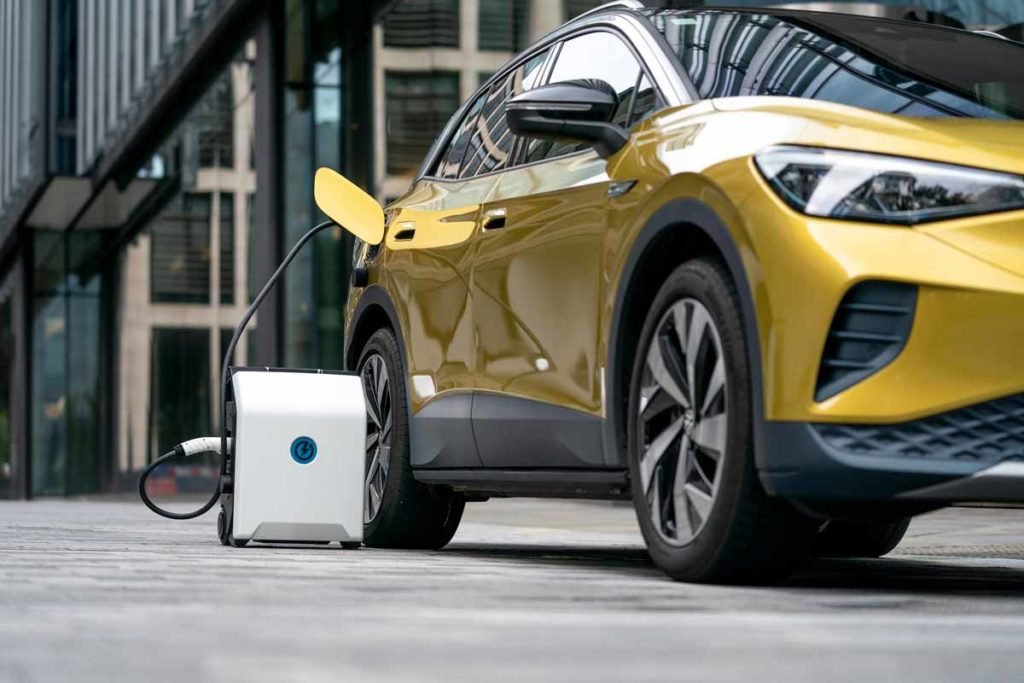
You can also read more about portable chargers for EVs in this article that I wrote.
How To Use Tesla Roadside Assistance
Tesla outlines how to use their Roadside Assistance service on their website. Still, if you don’t want to open more links than you have to (especially if you’re in a place where your internet connection is spotty), here’s a quick rundown:
- Go to your Tesla app.
- Look for the “Roadside” option.
- Under “Roadside,” look for the particular issue you’re experiencing, and select it. If it’s not already specified on the list, select “Additional Coverage.”
- Input as much information about your issue as you can.
- Tap “Request Help.”
Note that issues relating to “Out of Range” and “Additional Coverage” aren’t covered in the price of your Tesla. So, if these are the particular issues you’re experiencing, be prepared to shell out extra cash.
Tips for Conserving Battery Power in Your Tesla
While your Tesla will go an extra 12 miles (19.3 kilometers) after hitting 0%, it’s still best to avoid running out of battery power. Here are a few tips to help you conserve charge and get the most range out of your Tesla:
- Drive at a moderate speed. The faster you drive, the more energy your car will use. So, if you want to conserve battery power, it’s best to move at a moderate speed.
- Use cruise control. This feature can help you maintain a consistent speed and can also help you avoid sudden acceleration, which uses more energy.
- Limit the use of heat or air conditioning. These features can use a lot of battery power. So, if you want to conserve energy, it’s best to limit their use.
- Use seat heaters instead of the AC. Seat heaters use less energy than AC and can keep you warm.
- Use regenerative braking. This nifty feature can also help you recharge your battery while driving.
- Set a daily charging routine. This way, you can make sure your battery is always charged and never runs low.
Random Stat:
The Tesla Model S is one of the fastest cars on the road today. It can go from 0 to 60 mph (0 to 96.6 kph) in just 2.07 seconds and travel up to 315 miles (506.9 kilometers) on a single charge. It’s also one of the most energy-efficient cars, with miles per gallon equivalent to 104 (131.8 kilometers per liter).
The Average Cost of Charging a Tesla
The cost of charging a Tesla will depend on the type of charger you use, the price of electricity, and how much charge you need.
Here’s a breakdown of the average cost to charge a Tesla using different chargers:
| Charger | Cost of Using it |
| Level 1 | $2.75 |
| Level 2 | $1.00 |
| Supercharger | Free |
As you can see, the cost of charging a Tesla can vary depending on the charger you use. The most expensive option is the Level 1 charger, while superchargers are free.
To get the best value, it’s crucial to find an electricity plan that suits your charging needs. For example, if you only charge your Tesla once a week, you may want to find an electricity plan with a low daily rate.
On the other hand, if you charge your Tesla multiple times a week, you may want to find an electricity plan with a higher daily rate but lower per-kWh charges.
No matter what type of charger you use or how often you charge your Tesla, you can always find an electricity plan that suits your needs and budget.
Random Fun Fact:
You can use the Tesla Supercharger map to plan road trips. Just enter your starting location and destination, and the map will show you all the superchargers along the way. So, don’t worry too much if your Tesla runs out of battery power. With a bit of planning, you can ensure that you always have enough charge to get where you’re going.