

The cost of the first electric roadster available commercially in 1912 was $1,750, the equivalent to ~$48,891 per the current value of the dollar after accounting for inflation. The 2021 Mini Electric Hardtop’s original MSRP was $29,990. So, how cheap will electric cars actually get?
In the foreseeable future, electric cars will be cheaper than some gasoline cars’ base prices of ~$15,000. The base models of a few short & mid-range electric cars are already available at around $30,000. Electric cars can be more affordable, subject to a few factors.
Volkswagen’s subsidiary Skoda had priced the CITIGOe iV with a range of ~135 miles (~200 km) at around $20,000, but the all-electric city car is no longer in production. With most plug-in all-electric cars hovering at over $30,000, how soon will electric cars get cheap enough for all? Let’s find out.
Electric Cars May Get Up to 60% Cheaper by 2025
The battery pack in all-electric cars is a significant cost that makes such vehicles so expensive right now. In 2010, the volume-weighted average price of the standard battery packs used in many electric vehicles was $1,160 per kWh. In 2019, the cost came down to $156 per kWh.
According to the Big Ideas 2021 report published by Ark Investment Management, LLC, the volume-weighted average price of electric cars’ battery packs will reduce further to ~$100 per kWh by 2023/24. Thereon, the batteries will cost less than $100 per kWh by 2025.
Electric car battery packs are generally in the range of 50 kWh to 100 kWh. The price reduction from $1,160 to less than $100 between 2010 and 2025 should have an enormous impact on the cost of manufacturing an electric car.
Of course, you won’t notice a 90% reduction as the batteries are not the only component responsible for most electric cars’ steep prices.

What the industry expects is parity between electric vehicles and gasoline cars. Ark Investment Management estimates the price of an electric car with the same specifications and features as a 2019 Toyota Camry will be at par by 2023, i.e., ~$26,000.
While Toyota Camry and gasoline cars won’t get cheaper subsequently, electric vehicle prices will reduce further to ~$18,000.
This figure is a realistic estimate given the fact that Elon Musk and his team at Tesla have been working on a model that will be priced at $25,000. The model may lack a few features but could be introduced as early as 2023. If a Tesla model sells for $25,000, many will be much cheaper.
Electric Cars May Get Cheaper Than Gasoline & Hybrid Vehicles
Two fundamental truths about manufacturing and economics of scale are yet to benefit the electric vehicle industry. In 2020, electric cars formed only 3.2% of all cars sold worldwide. ARK estimates the annual number of units to rise from 2.2 million to 40 million by 2025.
The expansion of the market compelling the growth of electric cars manufacturing will have a phenomenal impact on the prices. This first manufacturing & economies of scale fundamental will definitely apply to this case. The second truth is about the viability and its resulting flexibility.
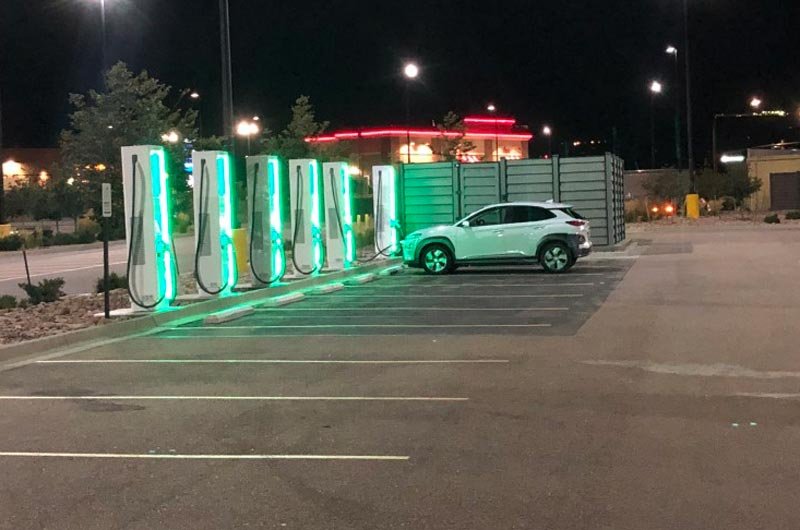
On a somewhat similar note, I also wrote an interesting article where I discussed Why Electrify America Is So Expensive. Go check it out and let me know what you think. They could certainly learn a lot from Tesla!
Tesla has built a network of superchargers in many parts of the country to enable convenient recharging for the owners of its models. Federal and state governments’ initiatives, private enterprises, and other influencing factors will lead to a widespread grid of electric car chargers.
Electric cars will be unprecedentedly cheaper as long ranges cease to be a pre-purchase concern or the most important criterion. Companies won’t be compelled to make only long-range models with expensive batteries if people can access charging stations conveniently.
The Upsides & Downsides of Cheaper Electric Cars
Cheaper battery cell technology and packs will inevitably reduce the prices of electric cars. New and emerging technologies, including materials science, have the potential to make cheaper electric cars viable. One example is the lithium-iron-phosphate battery chemistry.
Tesla is already using lithium-iron-phosphate or LiFePO4 (LFP) batteries in its cars sold across Europe, China, and Asia-Pacific. The company is now considering using the same technology for its short-range models in the United States. LFP batteries are safer and cheaper.
Interestingly, Tesla isn’t switching to LFP to reduce the prices of its electric cars but to increase its profits. However, other electric car manufacturers may pass on some of the financial benefits to customers by reducing their prices. Such developments can make electric cars affordable.
On the flip side, LFP batteries fare poorly in cold conditions compared to the chemistry in the packs Tesla uses right now. Also, the battery cell chemistry offers shorter ranges. How these factors pan out on the ground will influence a potential paradigm shift or lack thereof.
The other major challenge exists in the adaptability of traditional automobile manufacturers. Companies like General Motors have plans to switch completely to making electric cars. However, various factors shall determine if such ambitious plans come to fruition in reality.
If you would like to find out Why Used Electric Cars Are Cheap, check this article that we researched and wrote. This article delves into the factors that contribute to the affordability of these vehicles, such as depreciation rates and market demand. Additionally, our analysis provides insights into how advancements in technology influence the prices of used electric cars. For a deeper understanding, used electric cars pricing explained will clarify the nuances of different models and their value retention over time.
Besides, not all companies will voluntarily pass on the benefits of their reduced costs to the customers. Those reducing the sticker prices of electric cars will also strategize their MSRPs. Hence, electric cars may or may not get significantly cheaper than gasoline or hybrid vehicles.
The Prevailing Average Prices of Electric Cars in the US
Like gasoline and hybrid variants, the prices of electric cars fluctuate frequently, and the initial base price is rarely what people pay eventually. The average cost of the Mini Electric Hardtop is around $33,500, considerably more than the initially advertised price tag of $29,990.
Tesla has revised the prices of almost all its models several times over the years, ever since they rolled out the first Roadster in 2008. Similarly, Volkswagen’s all-electric city cars rivaling its own Skoda CITIGOe iV are selling for much more than the latter’s much-hyped ~$20,000 tag.
However, the average cost of electric cars has gone down over the years if you consider the prevailing prices while also factoring in the impressively evolved ranges. Interestingly, the prices of many popular models of all-electric cars haven’t really depreciated, and some have gone up.
The Price Trends of Electric Cars
Tesla Roadster’s original base price was $80,000, and variants cost as much as $130,000. The $109,000 average cost made it a luxury electric car, irrespective of the federal tax credit. The Roadster’s price did not get cheaper, but Tesla has rolled out models with lower price tags.
Tesla Models 3 and Y had base prices starting from ~$40,000. That gap of over $60,000 is an enormous leap. Yet, the $40,000 price tag is still much beyond the costs of numerous gasoline cars, including a few premium models, which explains why Tesla is a novelty purchase for many.
Prices of Hatchback Electric Cars
| Brand and Model | Base Prices (rounded off) |
| 2022 Nissan Leaf | $29,000 |
| Ford Focus* | $30,000 |
| 2021 Mini Electric Hardtop | $33,500 |
| 2021 Hyundai Ioniq Electric | $34,000 |
| 2021 Chevrolet Bolt | $36,500 |
| 2021 Volkswagen ID.3 | $39,000 |
*Ford Focus is no longer in production, but the company is expected to revive its electric range.
Most of these entry-level electric hatchbacks are city cars with upgraded variants available for a few thousand more. This list excludes brands and models like the 2021 Polestar 2 that have price tags of around or more than $60,000.
Prices of All-Electric Sedans
| Brand and Model | Base Prices (rounded off) |
| 2021 Tesla Model 3 | $46,000 |
| 2022 Lucid Air | $79,000 |
| 2022 Tesla Model S | $90,000 |
| 2022 Mercedes-Benz EQS | $105,000 |
| 2022 Audi e-Tron GT | $107,000 |
| Tesla Model S Plaid | $120,000 |
Many all-electric car makers have discontinued some of the older trims and variants. Thus, the starting base prices have changed in recent times. Some base models, such as Tesla’s Model 3 and S, were available at lower costs, but the newer variants have different starting prices.
Prices of All-Electric SUVs
| Brand and Model | Base Prices (rounded off) |
| 2022 Mazda MX-30 | $35,000 |
| 2022 Hyundai Kona Electric | $37,000 |
| 2022 Kia Niro EV | $41,500 |
| 2021 Volkswagen ID.4 | $42,000 |
| 2021 Ford Mustang Mach-E | $44,000 |
| 2021 BMW i3 | $44,500 |
| 2022 Volvo XC40 Recharge | $56,000 |
| 2022 Tesla Model Y | $60,000 |
| 2022 Audi e-tron | $67,000 |
| 2022 Jaguar I-Pace | $72,000 |
| 2022 Tesla Model X | $90,000 |
| 2022 Tesla Model X Plaid | $120,000 |
Some all-electric SUVs have additional costs for onboard software and other features, which may or may not be included in the base prices or MSRPs. Also, the trim variants and drivetrain choices for some brands and models will influence the actual cost of a car on the market.
The Realistic Future of Electric Cars
Electric cars have had an identical evolution as gasoline and hybrid vehicles in regards to the models or variants, pre-installed features, and customizable specs. Tesla’s rear-wheel-drive costs less than its dual-motor all-wheel drive. The tri-motor all-wheel drive is the costliest.
Likewise, electric cars with greater range and higher maximum speeds will definitely remain expensive even in the foreseeable future. Premium and high-end electric cars are unlikely to be sufficiently cheap for millions to find them affordable. Entry-level electric cars are the real story.
Realistically, the base models of electric cars of many leading brands, such as Tesla, Mercedes-Benz, and BMW, will have prices at ~$25,000, and some may be more affordable. Brands known for affordable electric cars may have base models priced at much below $20,000.
The Emergence of the Nascent Used Electric Car Market
Americans have purchased over 1 million electric cars from 2018 to 2021. There were ~1 million electric cars in the US in 2018, so the number is perhaps almost 3 million today and poised to be over 18 million by 2025 per a reasonable estimate. Thus, a used electric car market is viable.
Electric cars have fewer mechanical or moving components than gasoline and hybrid vehicles. Thus, their maintenance is simpler and more affordable. Also, electric cars are more dependent on firmware than traditional vehicles. New software updates are easier than hardware upgrades.
The prices of new vehicles will undergo extensive reviews as a nascent used electric car market emerges and expands. Furthermore, the cost of running an electric car is significantly less than a gasoline engine or hybrid vehicle. In effect, people may not be averse to used electric cars.
The Butterfly Effect of Cheaper Batteries on Used Electric Car Prices
The only deal-breaker for used electric cars can be the battery, except for other evident damages, of course. Tesla battery packs may cost up to $15,000 to replace. However, that kind of cost won’t apply to newer batteries as their prices have plummeted in the last eleven years.
As already cited in this article, the remarkable reduction of battery prices down to ~$100 per kWh will facilitate conveniently affordable replacements for those buying used electric cars in the near future. The relatively nominal costs of used electric cars and cheap new batteries create a new paradigm, a reality that will compel manufacturers to reduce their sticker prices.
The butterfly effect is not limited to cheaper batteries and used electric cars. Labor will become affordable, too. More technicians will understand electric vehicle technologies, especially battery packs, and thus will be able to carry out replacements and overhauls with ease and certainty.
In light of the evolution of all-electric cars and reducing prices, what are your personal preferences, needs, and buying criteria in the foreseeable future? As I consider my next vehicle, fuel efficiency and charging convenience have become top priorities. Additionally, I’m interested in sustainability features and the overall impact on the environment. To navigate this changing landscape effectively, I’ve been researching ultimate electric car ownership tips that can enhance my experience and investment.
EV Speedy’s Take
New and emerging technologies, industry trends, manufacturers’ policies, governments’ initiatives, energy reliability & security, and market responses will have inevitable influences on the actual prices people will pay for electric cars. Consumer preferences and the increasing availability of charging infrastructure will also play crucial roles in shaping this market landscape. As manufacturers adapt to these trends and innovate their offerings, the future of electric cars will be characterized not only by technological advancements but also by a more competitive pricing structure. Ultimately, these factors combined will determine how accessible electric vehicles become for the average consumer.
Conservatively, many electric cars will have a ~$25,000 sticker price by 2025, mostly base models but potentially several variants, too. Optimistically, several electric cars will sell for under $20,000, and some may even be as cheap as $15,000. However, there are caveats aplenty.
For instance, what if tax credits are reviewed?