

Teslas aren’t cheap, so you expect to get a loaner once you travel to the service center to have your car repaired. This is especially so if you’ve experienced what other manufacturers offer.
BMW, for instance, offers loaner cars for service or repair work exceeding two hours. Audi also provides loaner cars and offers to organize a rental car in the unlikely event that one isn’t available. So, do Tesla service centers give loaner cars?
Tesla Service Centers don’t always offer loaners. Getting a loaner depends on where you live, how much 2nd hand stock they have in their inventory, and which service center you bring your car to. It is unclear which exact criteria Tesla uses to give out loaners.
A common joke in Tesla forums is that there are no guarantees when it comes to Tesla, especially when expecting a loaner.
A survey of Tesla forums shows people have vastly different experiences when it comes to Tesla loaners. Some say they’ve always gotten a loaner from their local services center; others say getting a loaner from their local center is hit-or-miss; others say they’ve never gotten a loaner from their local center.
However, the reality is that some Tesla service centers don’t always provide loaners to their customers.
Most Tesla Service Centers Offer Uber Credits
Tesla’s carefully worded explanation about alternate transportation during service visits avoids stating that the company will provide a loaner: it states that Tesla will “offer alternative transport” as the service center deals with a repair.
The company also states that it doesn’t offer alternative transport for collision damage and recommends owners contact their insurer about a backup means of transportation.
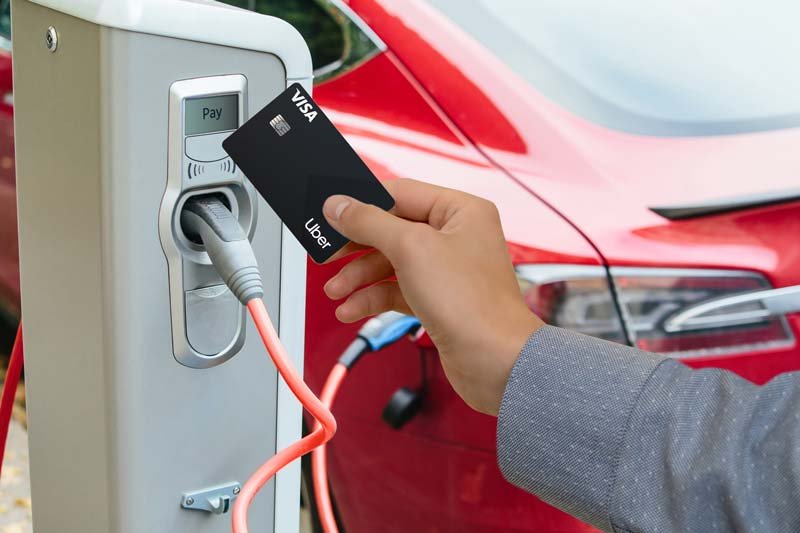
This wording allows Tesla service centers to offer Uber credits rather than loaner cars.
On a somewhat related note, I wrote an article called “Can You Use Uber Credits for Tesla Service?“. It will give you additional and valuable info. Check it out!
Uber has wooed car service centers for a long-time, marketing itself as a service better than shuttles and loaners. The people-ferrying service promises to provide on-demand rides for customers waiting for their cars at service centers while saving costs for the company.
Seeing an opportunity to cut costs, many car manufacturers, including Tesla, have gobbled up Uber’s bait.
By using Uber rather than providing loaners, Tesla service centers can take on more customers per day since they aren’t limited to the number of cars they have on hand.
Some Tesla users claim that if you feign inconvenience after getting the Uber credits, the service center will reluctantly grant you a loaner. However, be prepared to take an Uber, as I can’t guarantee that this method works.
Call Ahead To Find Out Whether Your Service Center Has Loaners
With no assurances that you’ll get a loaner during your car’s stay at the service center, it’s easier to call ahead to find out whether the service center offers loaners or perhaps negotiate your way into getting one. You’ll need to get a little cheeky to get this information, as customer care operators aren’t meant to answer questions about loaners.
The sole way to speak to a human service center operator is to select the option that lets you inquire about a car in service. This is the sole prompt that allows you to speak to an agent.
Remember that the other person on the line expects you to ask a question about a vehicle in service, so they won’t be too happy to get an inquiry about loaners. Therefore, be polite and present your query.
Since you are already connected, the customer care agent will likely give you the information you want.
As mentioned above, it’s shameful for a company like Tesla to have such a slipshod loaner service. Let’s look back, trying to figure out where things went wrong and the steps Tesla’s taking to fix it.
The Original Tesla Loaners Service Included Valets
The original Tesla loaners service was seemingly better than any other service out there. An article by the one and only Elon Musk on the Tesla website promised a ‘fleet’ of Tesla Model S loaners.
Elon promised that the Model S loaners would feature the latest tech, including top-of-the-range options and features. Tesla’s CEO stated that customers deserved to drive a car better than the one they’d left in the service center.
Being the shrewd marketer he is, Elon offered these premium Model S cars to customers at a discount – Tesla would cut one dollar from the purchase price for every mile driven. For instance, if the loaner had traveled for 1000 miles, the customer would pay $1,000 less.
The customer could also trade in their Model S for the loaner. Musk also gave customers in most areas the option to pick Tesla Roadsters as loaners.
The valet service was the cherry on top: Tesla offered to deliver the loaner to your location, pick up and drive your car to the service center, and return the car to you while taking back the loaner.
This service would blow other loaner services out of the water.
Elon Musk Promised To Increase the Number of Loaners
Tesla talked a big game and found it challenging to deliver. With Tesla owners looking to experience this loaner service promised by Elon, Tesla service centers found themselves short of loaners.
In 2017, Elon Musk announced an increase in the manufacturer’s test and loaner vehicles. He assured customers that the loaners would be the premium model of the Model S or Model X.
He said that the service would take a few months to roll out, but customers would approve the move. Musk joked that Tesla owners would pray for longer services to give them more time to drive the premium Tesla Models.
Then Tesla President of Global Sales and Services John McNeil said that Tesla planned to increase the number of loaners in proportion to the Tesla’s sold every quarter. It ensured that the loaner numbers met increased demand.
Tesla also saw providing the top-of-the-range versions of the Model X and Model S as a marketing strategy. Despite the performance versions of those vehicles costing significantly higher than the base models, Tesla wanted to give customers a feel of what they were missing and perhaps entice them into purchasing the cars.
Elon Described the Dwindling Loaner Service as ‘Incorrect’
Despite Tesla’s attempts to keep the loaner service alive and assurances that the company’s attempts would work, Tesla started rolling back on the loaner service in 2019.
Tesla didn’t announce that it was abandoning its loaner service. Instead, it quietly snuck in other options – Uber credits and cars from rental companies – probably hoping the Tesla community wouldn’t notice.
However, Tesla owners noticed, and they weren’t happy. Thankfully, the CEO Elon Musk is ever accessible on Twitter and on hand to answer customer grievances.
After a user begged Elon to bring back the loaner service, Elon described the program’s rollback as incorrect and promised to address it.
Elon Musk calling the gradual shut down incorrect confounded Tesla owners as it signaled that he had no control over the company’s decisions. It’s more likely, however, that he threw Tesla under the bus to make it seem like the company initiated the rollback without his consent.
Tesla and Elon knew that announcing the cancelation of the loaner service would anger customers, so they chose to start it in secret. Needless to say, Elon didn’t ‘address’ the loaner service as it remains in disarray in mid-2022.
Tesla’s Alternatives to the Loaner Program
Three years after it seemingly stopped trying to improve its loaner program, Tesla hasn’t provided a concrete solution to the issue. Consequently, Tesla owners arrive at service centers not knowing whether they’ll get a loaner, Uber credits, or a rental car.
However, just like it quietly began stifling its loaner service, Tesla has snuck in alternatives that eliminate the need for Tesla owners to visit service centers in the first place. You don’t need a loaner if Tesla can come to you and fix the vehicle.
Remote Troubleshooting
Teslas are always connected to the Tesla network. Therefore, Tesla can remotely fix software issues instead of having you transport the car to a service center.
Did You Know:
Investors gave Tesla’s in-car software a mammoth value of $905 billion.
The company famously fixed a fire issue through remote troubleshooting. The National Highway Traffic Safety Administration recalled Tesla Motors and GM due to problems that could cause fires.
GM recalled their vehicles while Tesla fixed the problem through a software update. The issue involved a charger plug that had been discovered to start fires.
The previous year, Tesla had updated their cars to fix a safety issue, but it didn’t garner much publicity as the National Highway Traffic Safety Administration didn’t issue an alert. The company had changed suspension settings to raise the car at high speeds to increase safety.
If Tesla can fix the issue via a system update, it won’t require you to visit a service center, negating the need for the loaner program.
Tesla Mobile Service
Tesla has introduced a mobile service to reduce the workload on their service centers and, consequently, the number of people who need loaners.
The company decides whether you qualify for mobile service. After scheduling an appointment, the app will inform you whether the service or repair qualifies for mobile service.
If so, the app will ask you to pick a time and place where a Tesla technician can drive over to perform the task. If not, you’ll book a slot at the service center.
You should modify the repair or service via the app 24 hours or more before the appointment. Any alteration made less than 24 hours before the service will force you to book another date and time.
Tesla advises customers not to install software updates sent on the day of the service as the technician will need them to perform the repair. Updating will increase the repair time, inconveniencing the technician.
Fun Fact:
Tesla mobile service technicians are also dubbed ‘Tesla Rangers,’ a really cool moniker.
The service was particularly useful during the COVID-19 pandemic. Car owners could leave their cars outside, unlock them via the app when the technician arrived, and settle the bill later.
Tesla Mobile Service Seems To Be the Future
Tesla’s investment in its mobile service nearly mirrors its investment in the loaner service (and we all know how that went). However, unlike its loaner service, Tesla has upgraded the mobile service without drawing too much attention to it – perhaps the company has learned from past mistakes.
Statistic:
In 2019, Tesla doubled its mobile service fleet – Model X SUVs, Model S sedans, and Ford Transit Vans – to 743 cars.
As much as Tesla has tried to keep the mobile service relatively under wraps, its eccentric and polarizing CEO has offered several insights into the service. Elon Musk stated that Tesla instituted the mobile service to reduce the load on Tesla service centers.
The company saw merit in the investment, considering Tesla’s ever-increasing sales. Per an August 2019 tweet, Tesla announced that people in 26 countries could access the service and that it had plans to expand.
Tesla mobile service reviews are mostly positive, with owners praising the service’s quality, speed, and convenience. It seems like Tesla has found the answer to its loaner issue.
| The Promise | Top-of-the-range loaner vehicle that you can purchase at a discount depending on its mileage. Valet service in which a valet picks up your car for service, leaves behind a loaner, returns your car and takes back the loaner. |
| The Reality | The service center will likely offer you Uber Credits. |
| The ‘Con’ | Sneakily call ahead to find out whether the service center offers loaners. Feign inconvenience when offered Uber credits to see whether the service center will provide you with a loaner. |
| The Alternatives | Pray that Tesla can fix the issue remotely or send a technician to perform mobile service. |